The AI-Generated Golden Eagle
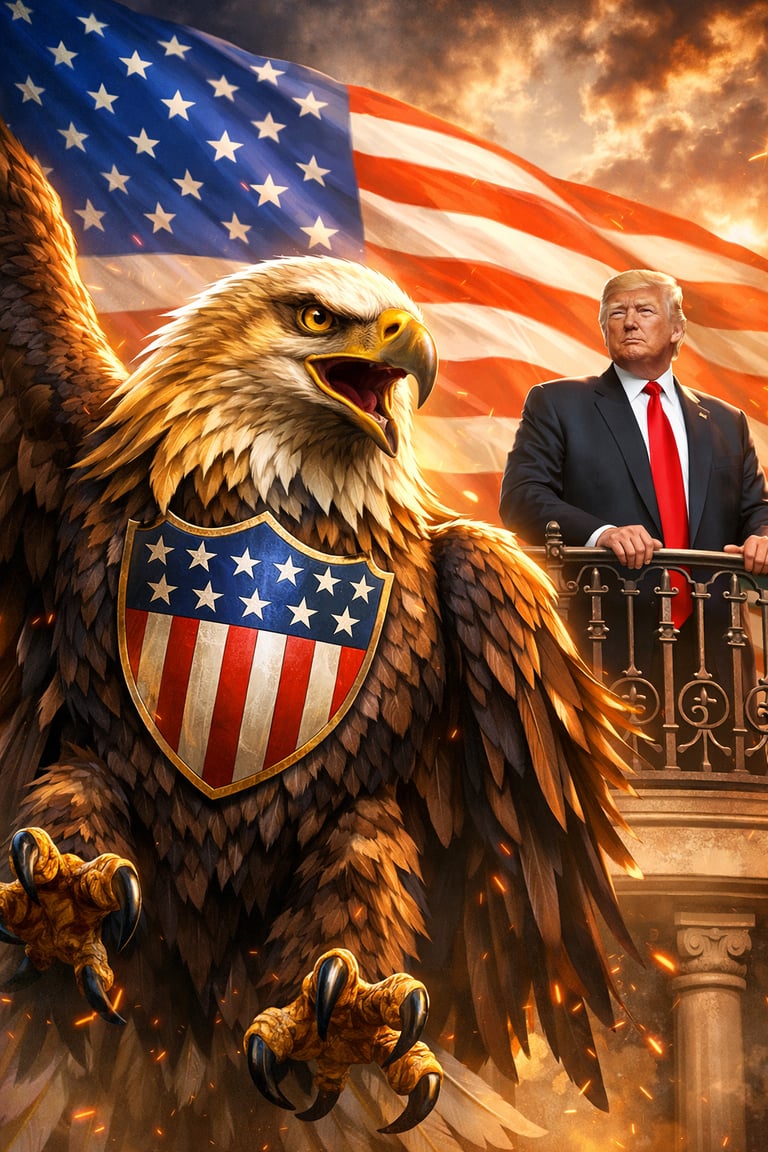
Donald Trump’s recent post featuring a golden eagle sparked debate after viewers spotted AI‑generated flaws — only 11 stars on the shield instead of 13 and a mismatched balcony railing. Explore how these subtle errors highlight the growing role of artificial intelligence in political imagery and online authenticity.
NEWS
7/2/20263 min read
The AI-Generated Golden Eagle
Trump’s AI-Generated Patriotic Post and What It Reveals About Today’s Political Internet
If you were online this week, you probably saw it: a dramatic image of a golden eagle soaring over a glowing American flag, shared by President Donald Trump. The post was designed to project strength and patriotic symbolism — but it quickly became the subject of a different conversation entirely.
Not because of the message, but because of the medium.
The image showed clear signs of being AI‑generated, and once viewers started spotting the inconsistencies, the discussion shifted from patriotism to digital authenticity.
The Image: Patriotic Symbolism Meets AI Artifacts
Eagles, shields, and flags are staples of American political imagery. But this particular composition had several unmistakable AI fingerprints:
The shield on the eagle’s chest displayed only 11 stars instead of the traditional 13, a detail that immediately stood out to designers and historians alike.
The balcony railing behind Trump didn’t match the real architecture of Mar-a-Lago, where the photo was originally taken — a classic sign of generative models improvising structural details.
Hyper-saturated lighting and metallic textures gave the eagle an almost video‑game sheen.
Anatomical oddities in the feathers and talons added to the uncanny feel.
Individually, these quirks might seem minor. Together, they painted a clear picture: this wasn’t a photograph, but a stylized AI creation.
Why AI Imagery Is Becoming a Political Tool
AI-generated visuals are everywhere now — and political figures are embracing them for the same reasons brands and influencers do:
They’re fast.
They’re dramatic.
They’re engineered to grab attention.
But they also introduce new challenges:
Authenticity concerns: When images look real at first glance, viewers question what’s genuine.
Credibility risks: Small inaccuracies — like missing stars or altered architecture — can undermine the intended message.
Transparency issues: Without labeling, audiences are left guessing whether a political figure knowingly shared AI content or simply liked the aesthetic.
In this case, the eagle post wasn’t misleading in a political sense — but it still sparked a broader conversation about trust and presentation.
The Internet Reaction: Memes, Mockery, and Media Coverage
Once the AI inconsistencies were spotted, the internet did what it always does.
Some users praised the dramatic style. Others joked that the eagle looked like it had been “rendered on a patriotic graphics card.” Designers pointed out the missing stars. Architecture buffs highlighted the balcony railing mismatch. Journalists noted the growing trend of AI‑enhanced political imagery.
A single post became a multi‑day discourse about digital aesthetics and political communication.
The Bigger Picture: AI, Politics, and Public Trust
The golden eagle incident is small, but symbolic of a much larger shift.
We’re entering a political era where:
AI‑generated content is normalized
Audiences scrutinize visuals as closely as statements
Authenticity becomes a strategic asset
Minor details — like star counts or railing designs — can change how a message is received
Whether campaigns embrace AI openly or continue using it quietly, the public is paying attention.
Final Thoughts
Trump’s AI eagle wasn’t a scandal — just a vivid example of how political communication is evolving. It’s bold, surreal, and unmistakably modern. But it also reminds us that in a digital landscape full of synthetic imagery, accuracy and transparency matter more than ever.
As AI continues shaping the political internet, we’ll see more posts like this — some inspiring, some bizarre, and all part of the new visual language of American politics.
Disclaimer: Political information changes quickly. Please verify details with trusted news sources.
(Image AI-Generated)






Mastersgt.com is a participant in the Amazon Services LLC Associates Program. As an Amazon Associate, I may earn from qualifying purchases at no extra cost to you!
Affiliate Disclosure & Privacy Notice
Some links on this site may earn me a commission if you click or buy (consider it a small donation to the Honda Club’s imaginary lawn mower fund, lol.) For details on how your data is handled (with care and a touch of absurdity), please visit the Privacy Policy.
Copyright Notice:
All content on Mastersgt.com is protected under copyright law. Unauthorized reproduction, distribution, or use of any text, images, or other materials without explicit permission is prohibited. If you'd like to share or reference a post, please provide proper attribution.