The Fourteenth Amendment
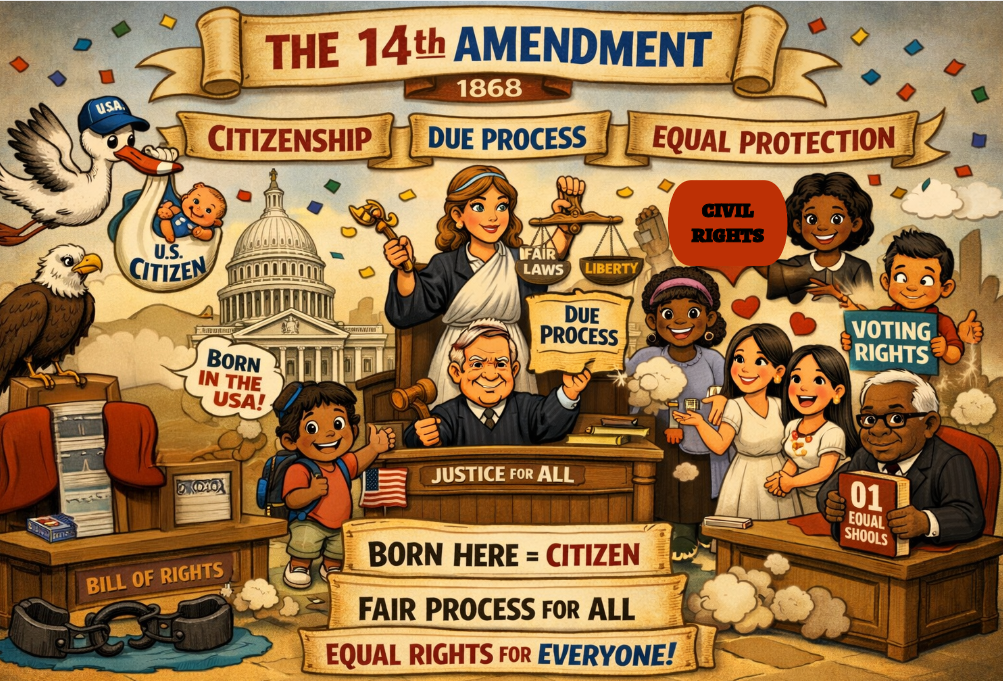
The Fourteenth Amendment is one of the most important parts of the U.S. Constitution. In one sentence: it guarantees citizenship, due process, and equal protection to all people in the United States.
Here’s a clear, structured breakdown grounded in authoritative sources.
Core Definition
The Fourteenth Amendment, ratified in 1868, grants citizenship and equal civil and legal rights to “all persons born or naturalized in the United States.” This clause is the foundation of birthright citizenship in the U.S.
Why It Was Created
After the Civil War, Southern states passed “Black Codes” restricting the rights of newly freed Black Americans. Congress responded by creating the Fourteenth Amendment to ensure states could not deny basic rights or recreate slavery in another form.
What the Amendment Actually Does
The amendment has several sections, but Section 1 is the most influential. It contains three major protections:
Citizenship Clause Anyone born or naturalized in the U.S. is a citizen. This prevents states from deciding who “counts” as American.
Due Process Clause States cannot deprive any person of life, liberty, or property without fair legal procedures.
Equal Protection Clause States must apply laws equally to everyone. This clause underpins landmark cases involving discrimination, school desegregation, marriage equality, and more.
Why It Matters Today
The Fourteenth Amendment is often called America’s “second Constitution” because it forces states to respect fundamental rights. It’s the reason most of the Bill of Rights applies to state governments — not just the federal government.
It also forms the legal basis for:
Birthright citizenship
Civil rights protections
Voting rights cases
Marriage equality
Police accountability
School desegregation
And it’s central to modern Supreme Court decisions, including the recent ruling rejecting Trump’s attempt to end birthright citizenship