What Trump’s New Marijuana Executive Order Really Means
Explore Trump’s new executive order on marijuana rescheduling. Learn what it changes, what it doesn’t, and how it impacts cannabis laws, taxes, and research.
NEWS
12/23/20253 min read
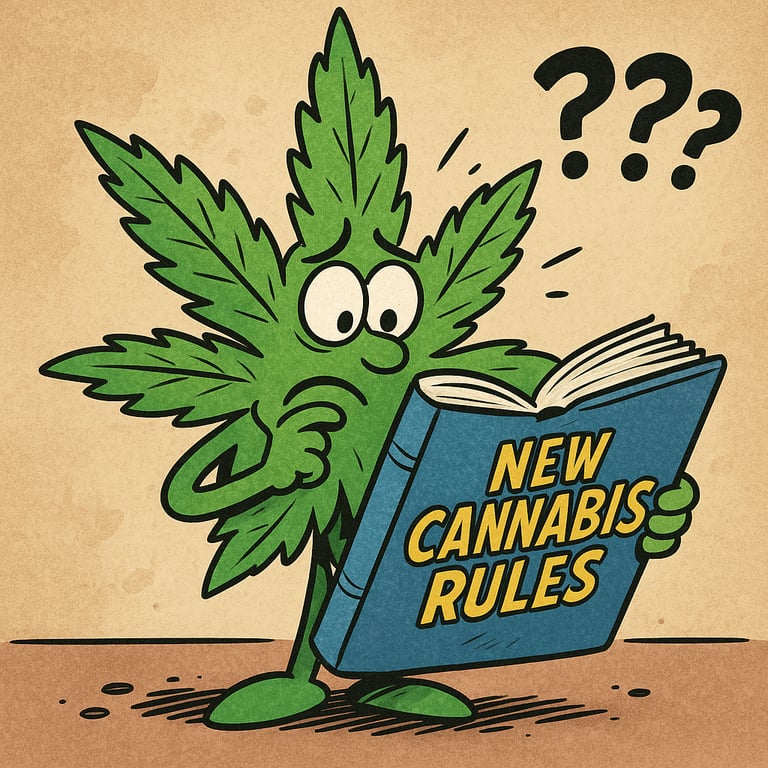
What Trump’s New Marijuana Executive Order Really Means
When we last talked about the federal crackdown on high-THC hemp products, the landscape felt, well… Chaotic! It was a mess with businesses panicking and consumers confused. Now, President Trump has signed a sweeping Executive Order that reshapes the federal status of cannabis - and changes the conversation in a big way.
Let’s break down the logistics of this new order, what it changes, and what it al really means.
Here is the “too high; didn’t read” (TH;DR) version of what’s happening.
What the Executive Order Actually Does
According to multiple reports, Trump signed an Executive Order directing the DOJ and Attorney General Pam Bondi to fast-track moving marijuana from Schedule I to Schedule III under the Controlled Substances Act.
Here is what this means in plain English:
Marijuana is no longer classified alongside heroin and LSD
Schedule I drugs are considered to have “no accepted medical use” and a high potential for abuse. Cannabis has been stuck here for decades.
It is now grouped with substances like Tylenol with Codeine and Ketamine
Schedule III drugs are still controlled, but they are recognized as having legitimate medical uses and lower abuse potential.
The order directs the Attorney General to “take all necessary steps” to complete the rescheduling process
This means the DEA and DOJ must fast-track the rule-making and finalize the shift.
It also instructs the administration to work with Congress on redefining hemp-derived cannabinoids
The order pushes Congress to fix the "hemp vs. marijuana" identity crisis. They want safe, full-spectrum CBD to stay available while weeding out (pun intended) the sketchy, unregulated bathtub chemicals.
What This Does NOT Do
Please read the following before lighting up in front of a federal building…
It is NOT Federal Legalization: You can still get in trouble for possession under federal law. We’ve just moved from “Super Illegal” to Regularly Illegal.”
States Still Rule Their Roosts: If you live in a state that hates weed, this order doesn’t force them to love it. Local laws still apply.
Nothing Changes Tomorrow: This triggers a regulatory process, not an overnight dispensary sale. Your local budtender isn’t getting a federal tax break by Tuesday.
Why This Matters (The “Follow the Money” Section)
This isn’t just about vibes; it’s about business and science:
Tax Relief (the 280E Killer): Currently, cannabis businesses are taxed on their gross income due to an outdated rule known as Section 280E. They can’t even deduct the cost of their rent or payroll. Moving to Schedule III eliminates this penalty, which is essentially the industry’s equivalent of winning the lottery.
Research Freedom: Science has been handcuffed for years. This order clears the path for more clinical trials. We might finally get real, FDA-standard data on dosing instead of relying on "my cousin Dave said this strain is good for sleep."
Medicare Pilot Programs: The administration is launching a Medicare CBD pilot program. Yes, Grandma might finally get her CBD therapies covered by the same government that used to call it "the Devil's Lettuce."
Hemp/CBD Safety: The order pushes Congress to fix the "hemp vs. marijuana" identity crisis. They want safe, full-spectrum CBD to stay available while weeding out (pun intended) the sketchy, unregulated bathtub chemicals.
The Big Picture: A 50-Year Stigma is Cracking
Moving cannabis out of Schedule I is as much about the "vibe shift" as it is the law. It signals that the federal government is finally aligning with reality.
However, the next few years will be a huge game of tug-of-war between federal regulators, big pharma, and state governments. Rescheduling doesn’t end the debate - it only turns up the volume.
Where This Leaves Us
If the recent THC bans felt like a step backwards, this Executive Order is a complicated step forward. It modernizes federal policy in a way that could reshape an entire industry. For all of us watching this unfold, it means the story is far from over.
Mastersgt.com is a participant in the Amazon Services LLC Associates Program. As an Amazon Associate, I may earn from qualifying purchases at no extra cost to you!
Affiliate Disclosure & Privacy Notice
Some links on this site may earn me a commission if you click or buy (consider it a small donation to the Honda Club’s imaginary lawn mower fund, lol.) For details on how your data is handled (with care and a touch of absurdity), please visit the Privacy Policy.
Copyright Notice:
All content on Mastersgt.com is protected under copyright law. Unauthorized reproduction, distribution, or use of any text, images, or other materials without explicit permission is prohibited. If you'd like to share or reference a post, please provide proper attribution.